
The Day Software Menus Died: My First Encounter with ClawdBot
In January 2026 I stumbled upon a tool that genuinely unsettled me: ClawdBot, At first glance it looked like yet another AI agent wrapper. But once I started using it with GPT-5.2, the implications became difficult to ignore. Tasks that previously required carefully designed automation pipelines—especially the sort of multi-step workflows I would normally build in n8n—were suddenly completed through a single conversational instruction. Data retrieval, reasoning, tool usage, and execution were orchestrated automatically. What shocked me was not just the efficiency. It was the realization that the traditional paradigm of software—menus, dashboards, forms, and automation builders—might be quietly collapsing. This post describes my first encounter with ClawdBot, the technical shift it represents, and why it left me both excited and deeply uneasy about the future of software.
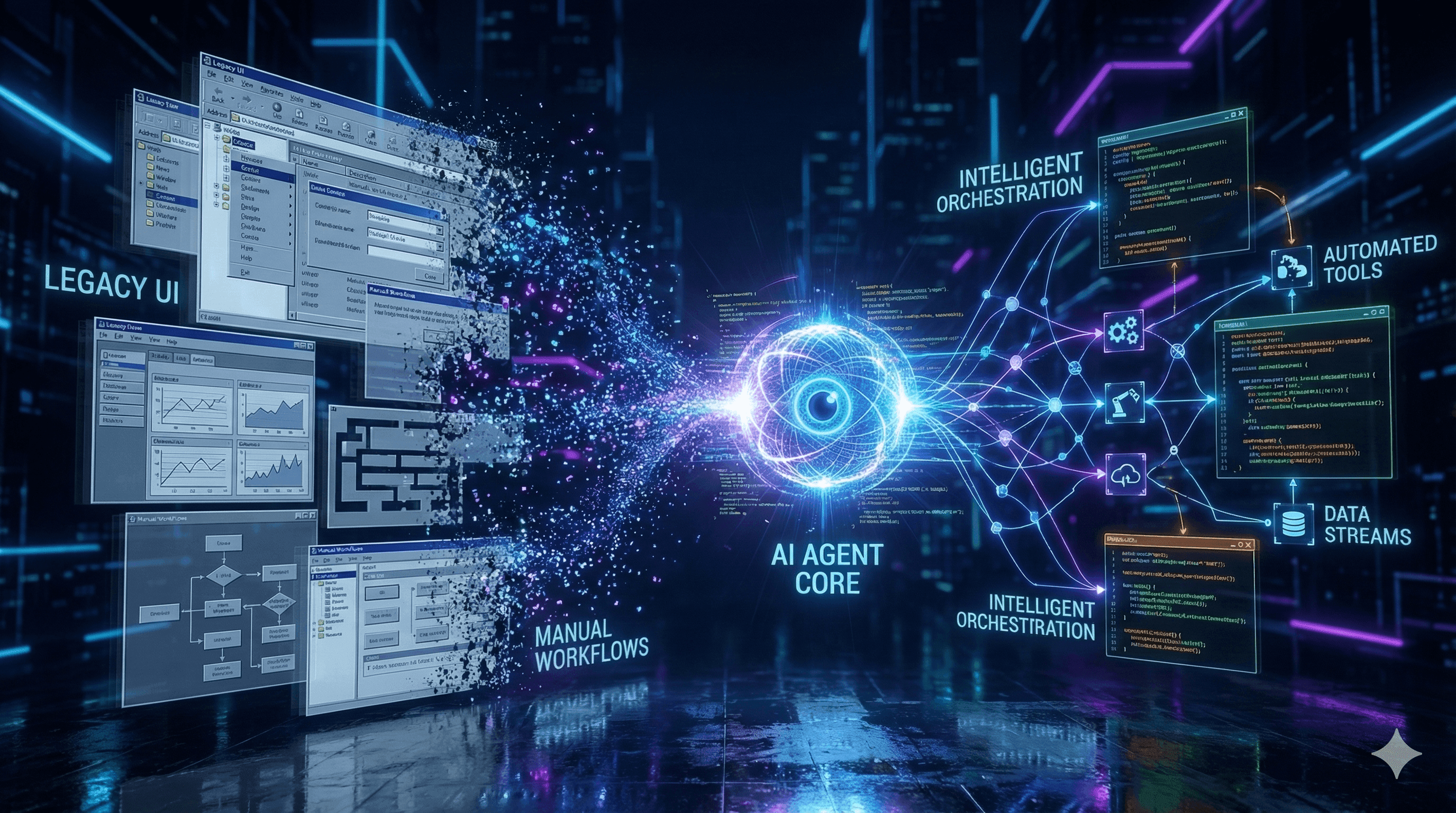
In early January 2026, I came across a project called ClawdBot.
At that moment it still felt like an obscure experimental tool circulating among developers who were pushing the limits of AI agents.
At first glance, I assumed it was just another interface around large language models. Over the past two years we have seen countless “AI copilots”, “AI assistants”, and “AI workflow tools”. Most of them ultimately reduce to the same pattern: a chat UI connected to a model and a few integrations.
But ClawdBot turned out to be something very different.
The First Experiment
I connected the system to GPT-5.2, which at the time was already one of the most capable reasoning models available.
Then I gave it a task that normally requires a fairly complex automation pipeline.
The task involved:
retrieving structured data
transforming it
calling external services
performing reasoning on the results
generating a final output
In the past, this kind of workflow would almost certainly require n8n.
And not just a simple flow.
Usually I would need to carefully design a multi-node pipeline:
HTTP trigger
data extraction
transformation logic
API calls
conditional branching
aggregation
output formatting
It would take time to design, test, and maintain.
So I asked ClawdBot to perform the same task.
Not by designing a workflow.
Not by writing automation rules.
Just a single instruction.
What Happened Next
ClawdBot did something remarkable.
It planned the steps itself.
It reasoned about the task.
It selected the tools.
It executed them in sequence.
It verified intermediate results.
And then it produced the final output.
The entire process unfolded almost like watching a human engineer operate a console.
Except there was no workflow diagram.
No automation graph.
No drag-and-drop builder.
Just a prompt.
And the system executed a multi-step workflow that would normally require manual orchestration.
The Moment of Realisation
That was the moment I felt a genuine shock.
Because something deeper became obvious.
For decades, software has been designed around interfaces:
menus
dashboards
forms
buttons
workflows
configuration panels
Even modern automation tools like n8n or Zapier still rely on this paradigm. They simply replace menus with visual pipelines.
But ClawdBot suggested something else entirely.
A world where natural language becomes the only interface.
You don't build the workflow.
The AI builds it for you.
In real time.
Excitement… and Unease
My immediate reaction was excitement.
But the second reaction was something else.
Unease.
Because if this approach works—and early experiments suggest that it does—then an uncomfortable question appears:
What happens to traditional software?
If AI agents can dynamically plan and execute workflows, then many categories of software may start to disappear.
Automation builders.
Complex dashboards.
Configuration-heavy enterprise tools.
All of them exist largely because humans need structured interfaces.
AI does not.
A Personal Realisation
For someone like me, who has spent years building SaaS systems and automation pipelines, this realization was deeply unsettling.
The tools we spent years mastering might be transitional technology.
Temporary scaffolding.
Bridges between the old world of software interfaces and the new world of agent-driven systems.
ClawdBot was the first time I truly felt that transition happening.
Not as a theory.
But as a working system.
Why This Matters
This shift is not just about productivity.
It changes how software itself is designed.
Instead of:
The future might look like this:
Software becomes capabilities, not interfaces.
Agents decide how to combine them.
Where This Leads
Since that first encounter with ClawdBot, I have been thinking obsessively about what comes next.
If agents are going to orchestrate software dynamically, then we will need systems that are:
transparent
auditable
controllable
local-first
privacy-first
Users must be able to understand what their agent is doing.
Not just trust it blindly.
This idea is one of the motivations behind the work I am currently doing with PonyBunny.
But that is a story for another post.
Final Thought
ClawdBot didn't just show me a new tool.
It showed me a glimpse of a different future for software.
And honestly, it left me with two feelings at the same time:
A sense of excitement.
And a quiet fear that the software world we know today might already be disappearing.